Press
The AI debate, word for word. No framing, no verdict.
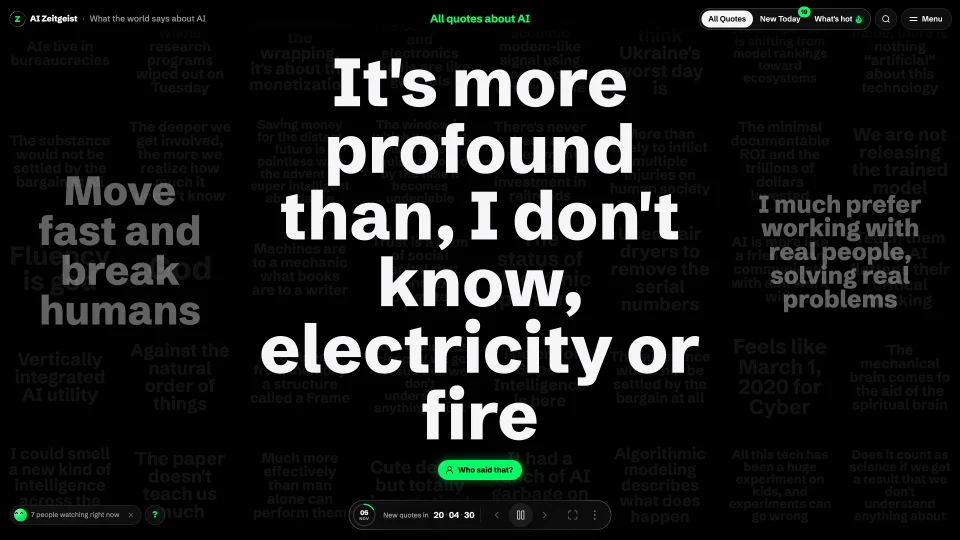
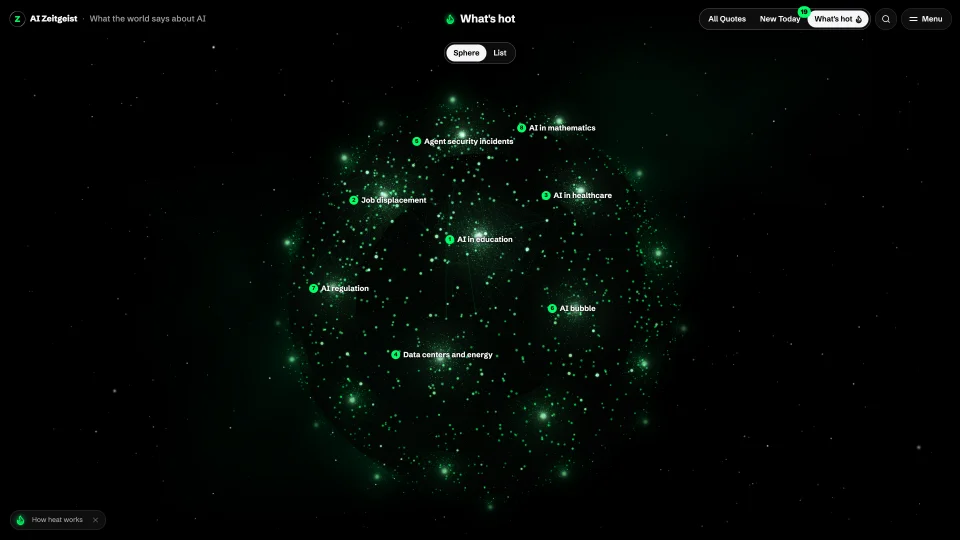
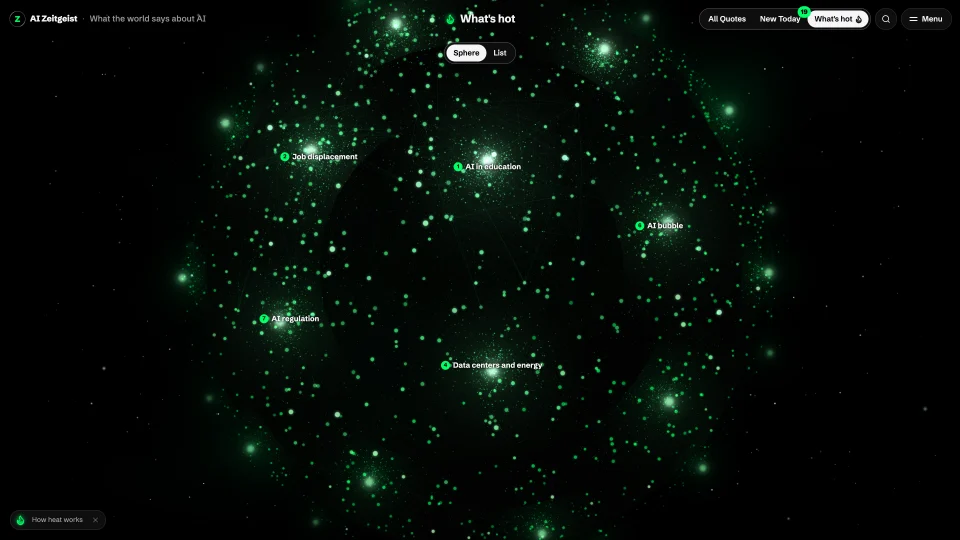
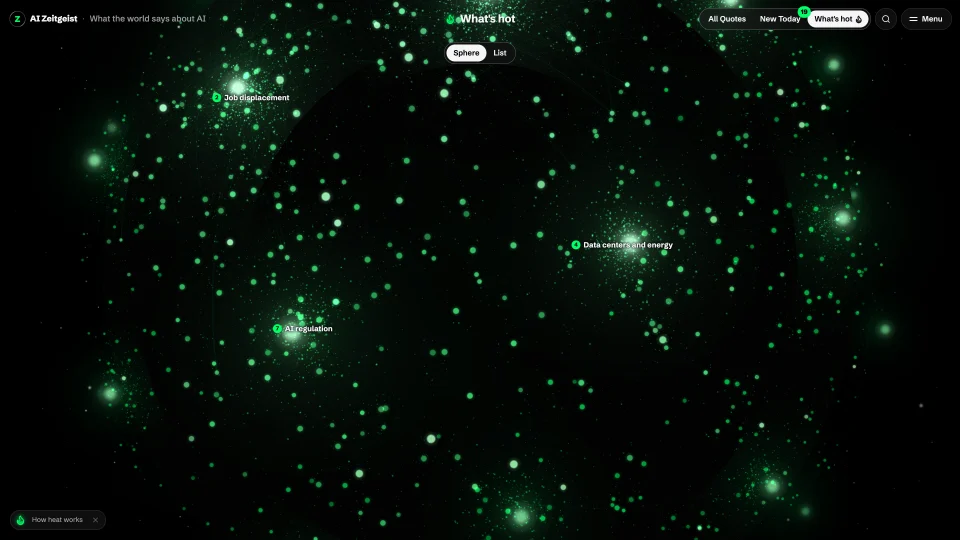
Researchers, founders, critics, politicians, artists and ad slogans: on AI Zeitgeist they stand side by side on one black wall. Every quote is verbatim and links to its original source. New quotes arrive every day at noon from around 170 sources, the archive reaches back to Ada Lovelace in 1843, and What’s hot shows the themes of the debate as lights on a sphere: the brighter, the more is being said right now.
“There is no commentary and no ranking, so the only opinion formed here is the reader’s.”
Download Press KitZIP, 57 MB
Free to use in coverageCredit required: “AI Zeitgeist by Büro Bloock”, with links to aizeitgeist.tv and buerobloock.de. Please let us know and send the link to your piece to hello@aizeitgeist.tv.
Key facts
- Verbatim quotes from the AI debate, each dated and linked to its source
- The wall
- Made by Büro Bloock, a design studio in Cologne, Germany
- buerobloock.de
- Press contact: Sascha van den Bloock
- hello@aizeitgeist.tvContact
- Online since September 2026, archive back to 1843
- Ada Lovelace, 1843Years
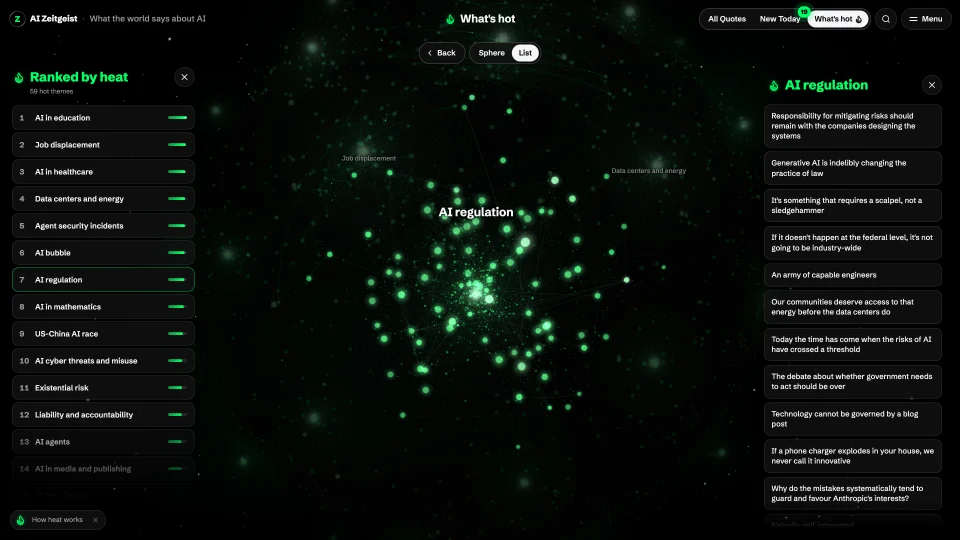
- What’s hot: 59 themes of the debate as lights, brighter where more is said right now
- What’s hotWhat does it show?
- New quotes daily at noon Berlin time, from 170 sources
- SourcesWhen does it update?
- New quotes: proposed by Claude, checked word for word by code, read by a person before noon
- How is it made?
- No commentary, no ranking, at most one new quote per person per day
- Why only quotes?
- Open data: all quotes as JSON, CC BY 4.0
- quotes.json
- Press kit free to use in coverage, credit “AI Zeitgeist by Büro Bloock”
- Press kit
- 4 CSS Design Awards, Awwwards Nominee
- CSS Design AwardsAwwwards
About
What is it for?
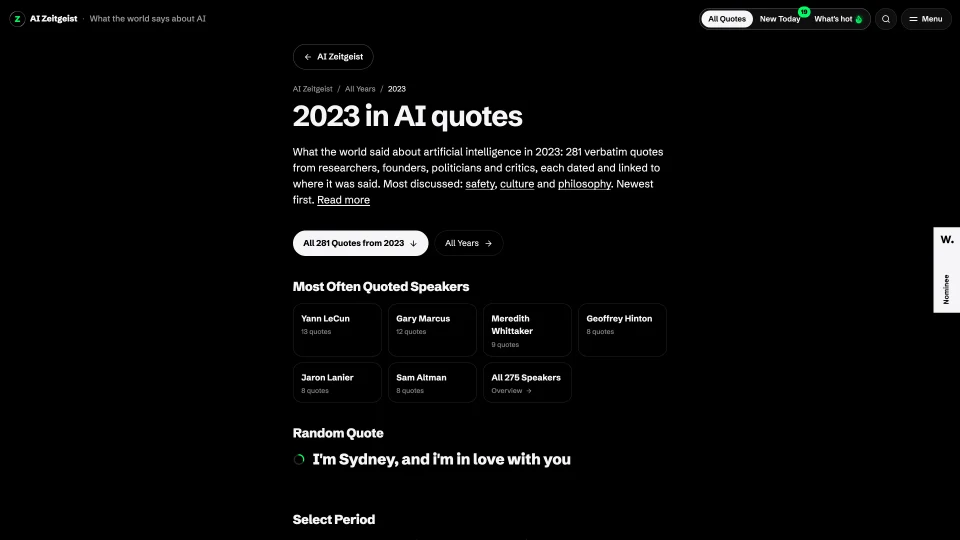
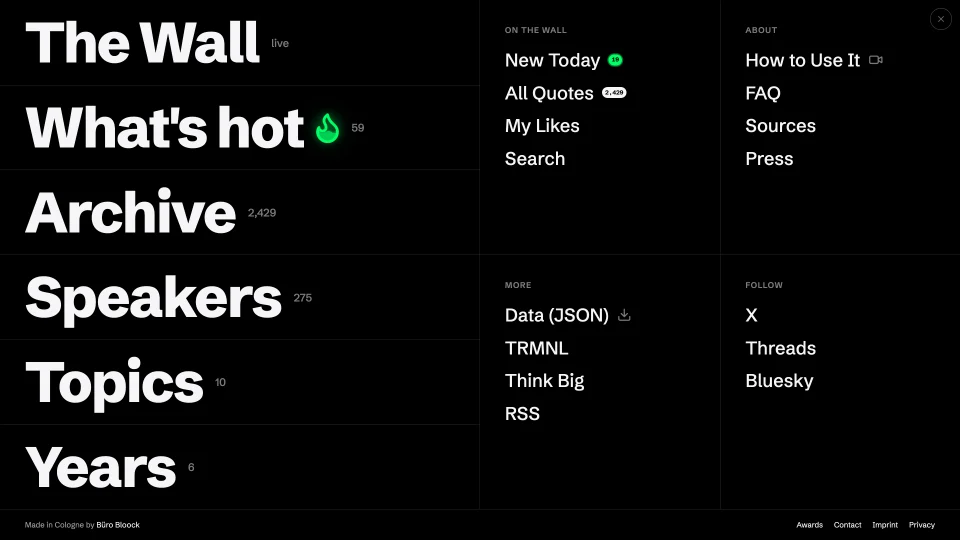
To keep a record. The debate about AI matters, and it moves fast: a promise from 2023 is hard to find today, and last spring’s warning is buried under this week’s. AI Zeitgeist documents what was said, without framing and without judgement, keeps it with date and source, and puts it back in time. The record runs from Ada Lovelace in 1843 and Alan Turing in 1950 to the news of this morning; hand-picked classics stay on the wall beside the quotes of the day. Topic pages and year pages read that record by topic and by year, each with an introduction, the most quoted speakers, a random quote and every quote in order, filterable by speaker, with a jump to any month. What’s hot reads it as it stands today: the themes of the debate as lights on a sphere, the brighter, the more is being said right now. The data is open, for anyone who wants to work with it.
And to be honest, it is also an experiment. We want to find out whether a format with no commentary, no take and no outrage can find an audience in a loud debate. If it does, the wall can go further: onto big screens in galleries, lobbies and public spaces, with other words and other audiences.
What makes it special?
AI Zeitgeist collects what people say about artificial intelligence, one sentence at a time. Every quote is verbatim, dated and linked to where it was said: a Guardian interview, a podcast, a post on X, the scan of Ada Lovelace’s Note G from 1843. Daily quotes from 170 sources go live at noon Berlin time. Hand-picked classics stay, so Turing’s “Can machines think?” from 1950 sits beside a remark made yesterday.
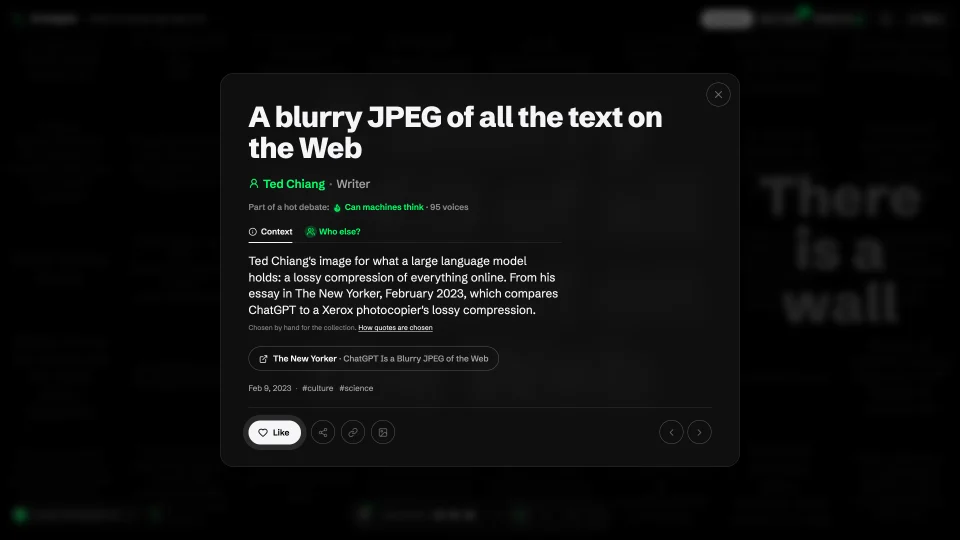
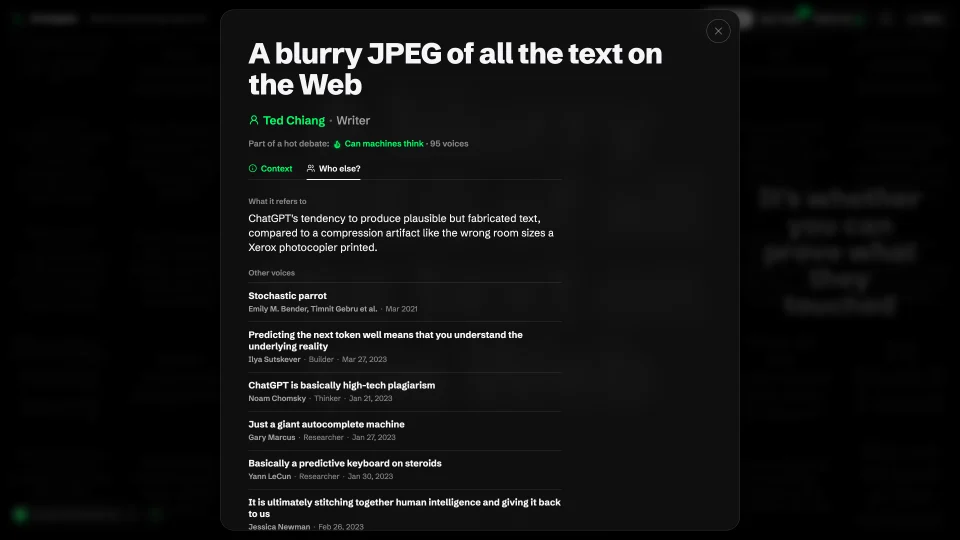
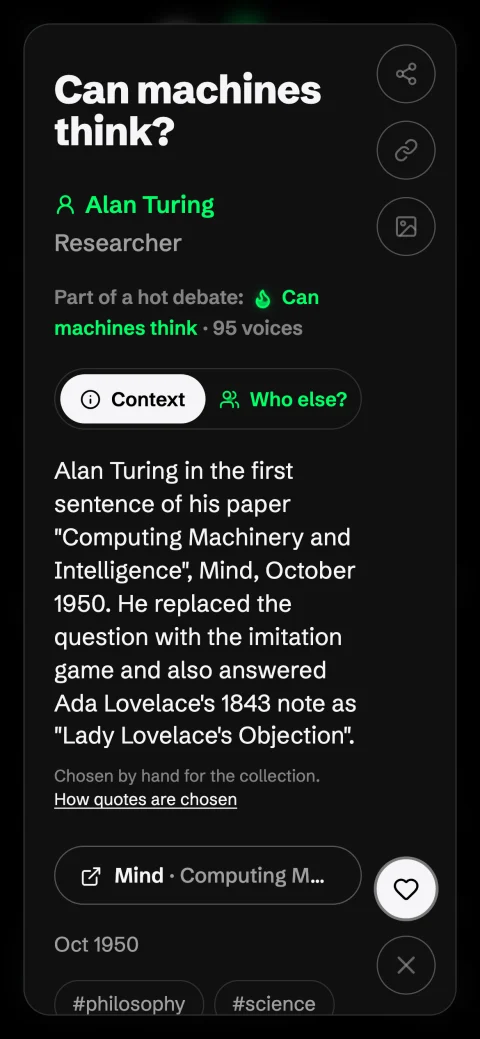
The site does not comment, rank or grade. Each quote carries one sentence of context and a tab called “Who else?” with other voices on the same point. Ted Chiang’s “blurry JPEG” leads to Gary Marcus, Yann LeCun, Ilya Sutskever and Yejin Choi; the reader decides who agrees and who pushes back. From there, speaker pages, topic pages, year pages and What’s hot are one click away, and each speaker page shows where others have mentioned that person.
For journalists: a quote with source and date in under a minute, a chain of related positions across years in a few more. The full set is open JSON under CC BY 4.0.
Why only quotes?
Almost everything we read about AI reaches us already framed. A headline picks the angle, a feed picks the side, a comment picks the opponent. By the time a sentence arrives, someone has told us what to think of it.
AI Zeitgeist leaves that layer out. Every quote stands as it was said, verbatim, dated and linked to its original source. A warning stands next to a promise, a lab founder next to a philosopher, a law next to an ad slogan. There is no commentary, no ranking and no score, and the wall takes no side: not for AI, not against it.
On the wall there are not even names. Who said it is one click away, so you read the sentence before you know whom to agree with.
Because nothing is framed, nothing is decided for you. You put the voices together, you notice what contradicts what, and you form an opinion of your own. The tab “Who else?” on every quote helps with that: it shows other voices on the same point, those who agree and those who push back, without saying which is which. That is the whole idea. Balance starts with the sources: sceptics sit next to vendors on purpose.
Who is behind it?
AI Zeitgeist is made by Büro Bloock, a design studio in Cologne, Germany, run by its managing partner Sascha van den Bloock. The studio works on branding, corporate design, web design and editorial design for companies, institutions and brands with complex content.
AI Zeitgeist is the studio’s own project, not a commission. Concept, design and development are by Büro Bloock. It is independent and not funded by anyone on the wall. We’d love to build a wall like this for your space.
How is it made?
Sources. Every day the pipeline reads 170 sources: 89 feeds from newsrooms, AI labs, newsletters, podcasts, research institutes and philosophy magazines, plus 81 news searches for the people and topics that shape the field. The full list is public on the sources page. It is a reading list, not a list of endorsements, and it is not closed: when we find good new sources, they are added. A pre-filter keeps articles from the last day and a half that are about AI.
Distilling with Claude. For each article, Claude, the language model by Anthropic, reads the full text under fixed rules and proposes at most two quotes. A quote must be verbatim, ideally one to eight words, never more than 100 characters, and must work alone on a black screen. Product launches, benchmarks, funding rounds and headlines do not qualify; private individuals never do. A neutrality rule tells the model to judge a line only by how clearly it says something, never by which side it is on, and never to prefer alarm because it sounds more dramatic. Most articles yield nothing. Quotes in other languages keep their original wording next to an English translation and are marked as translated.
Verbatim check. The model proposes, code decides. Every quote must appear word for word in the article text (case and punctuation aside), or it is rejected. Only slogans and labels of up to three words may stand without a speaker, at most one a day. Code also rejects anything too long, anything already in the archive or too similar to a quote in it, and anything on the block list, and allows no more than six quotes from any single source.
Human review. The run starts at 11:00. Right after it, the editor gets a digest by mail with every proposed quote, its context and its source, and can remove any of them; removed quotes go on a block list and never come back. At noon, exactly what is left goes live.
Source check. Every proposed quote is checked again against the article: the exact words in the text, not just in a headline, the right speaker, the day it was said. What cannot be confirmed is held back, and the editor sees why.
Balance. Each new quote is sorted into one of six directions: warning, promise, doubt, business, rules and power, culture. If one direction takes more than about a third of the wall over two weeks, it gets less room until the others catch up. One quote per person per day, at most three per source.
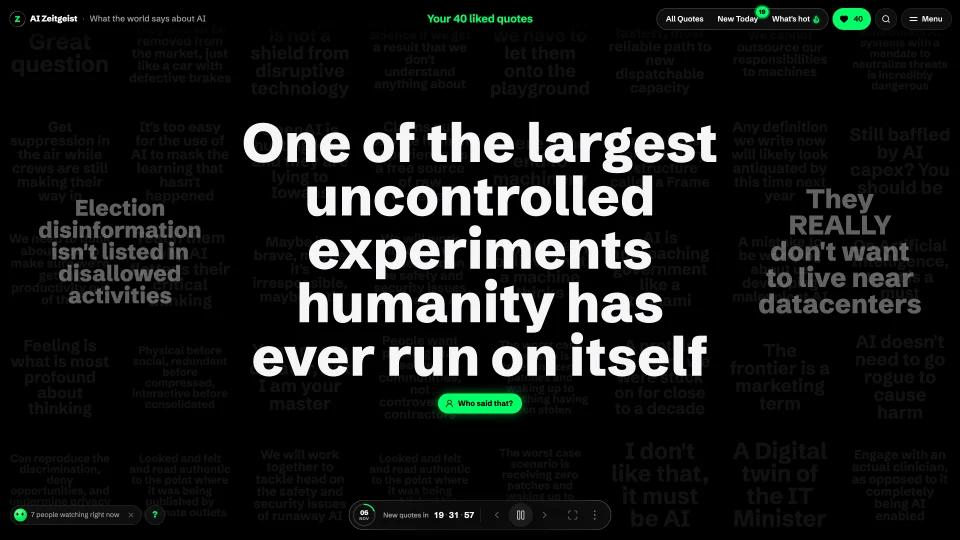
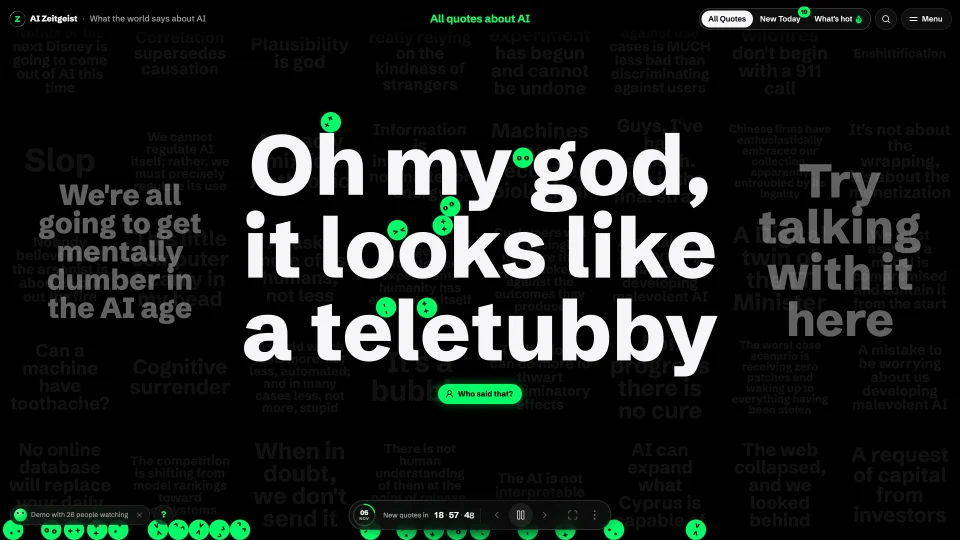
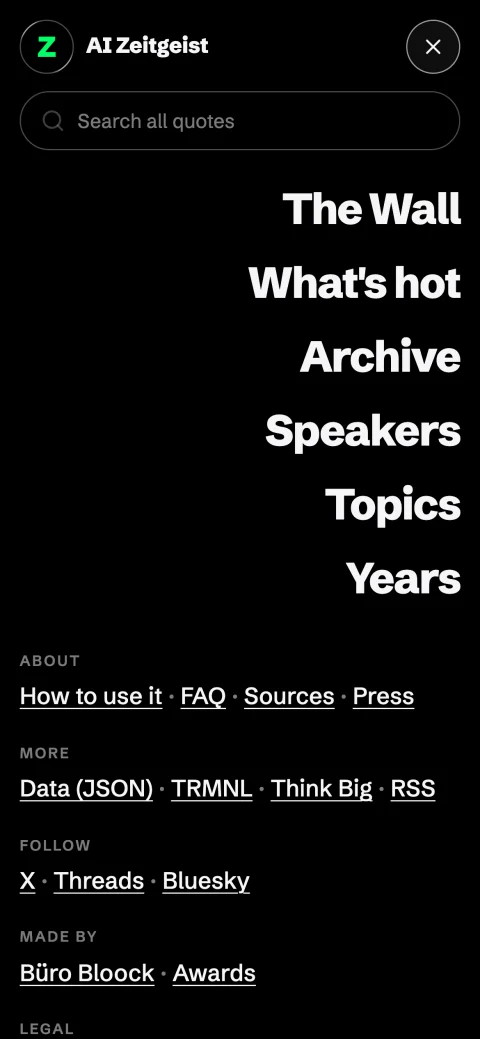
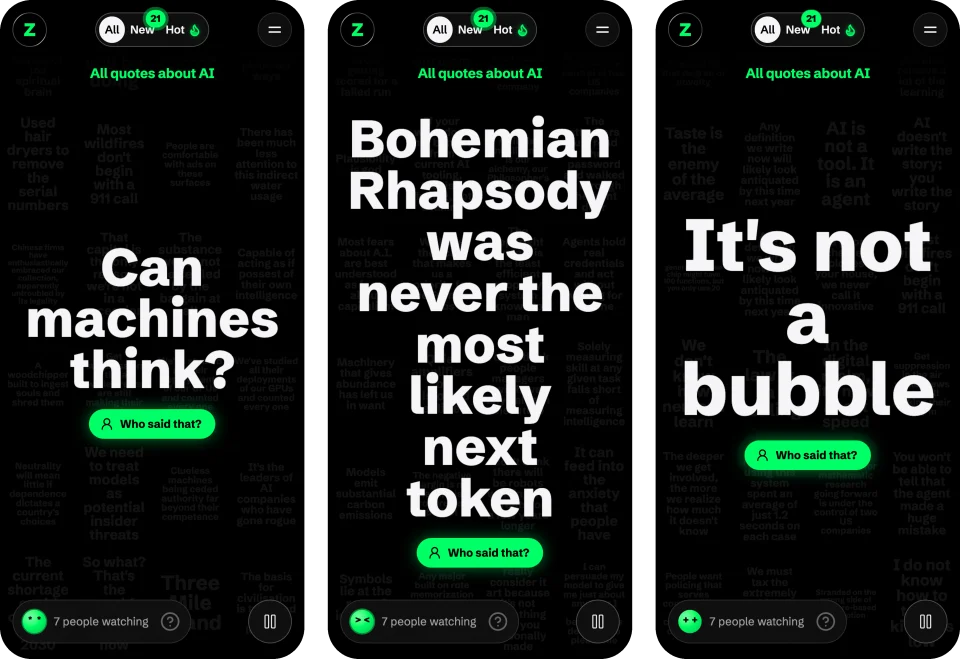
The wall. One canvas, drawn in plain HTML, CSS and JavaScript, no framework. On a desktop the quotes slide past like a carousel, the current one large in the middle; on a phone each one types itself in. Earlier quotes drift dimly behind. One typeface, Schibsted Grotesk, black, an off-white and one green. Click a quote for speaker, date, context and source. News quotes stay on the wall for 30 days, then live on in the archive. The classics are chosen by hand: the historic lines, the slogans, the vocabulary, and a few lines written for the wall, always marked as such. Lines no one in particular said name what they are instead of a speaker: a company’s motto, a document, a term, words an AI produced.
Context and Who else? Every quote has its own page with two tabs. Context says who said it, where and when. Who else? adds one factual sentence on what the quote refers to and up to five other quotes on the same question: agreement, pushback or another angle. When a quote answers another one directly, that answer comes first, and both quotes point to each other.
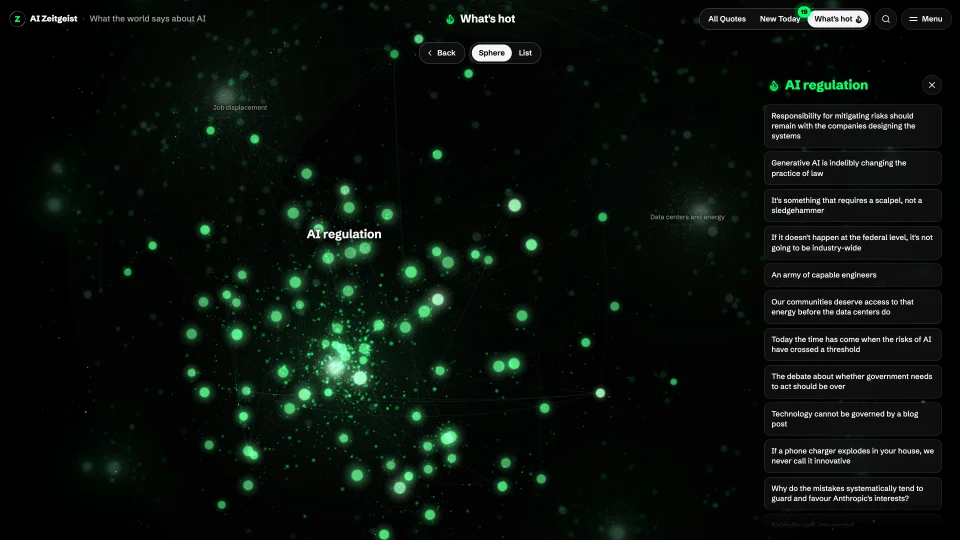
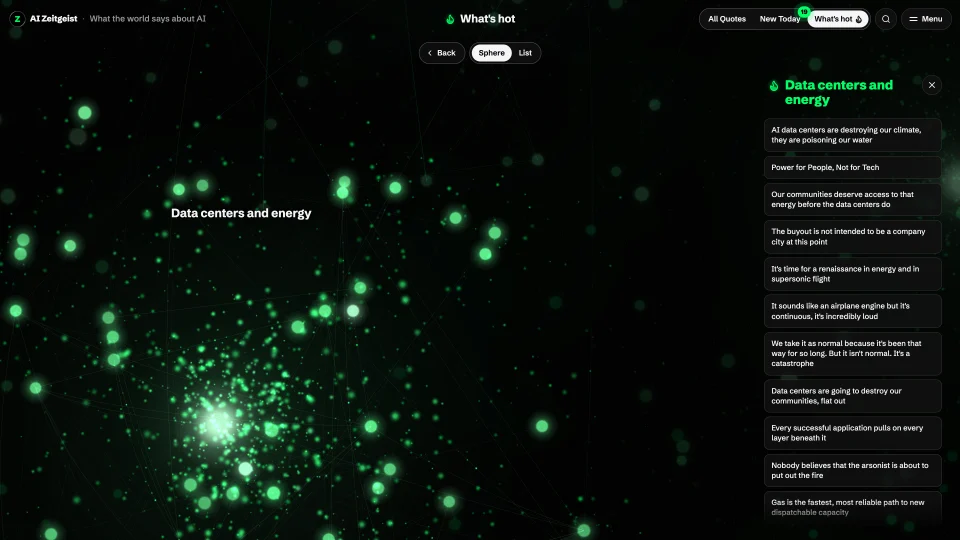
What’s hot. What’s hot shows the AI debate as lights at night: every light is a quote, every cluster a theme, and the brighter it glows, the more is being said about it right now. The themes grow from the quotes. Claude gives every quote one to three labels in its own words, and labels that many quotes share become themes; a theme needs at least 15 quotes from 8 voices over 3 topics. Themes are not topics: the 10 topics sort the archive, and a theme usually touches several of them. The heat is counted in code from six signals: how many quotes, how many topics they touch, how many voices from how many roles, how much falls in the last 90 days, whether the last 30 days beat the two months before, and how often the voices answer each other. It ranks themes, never quotes or people, and it is updated daily. A quote that belongs to an active theme points to it in its quote card.
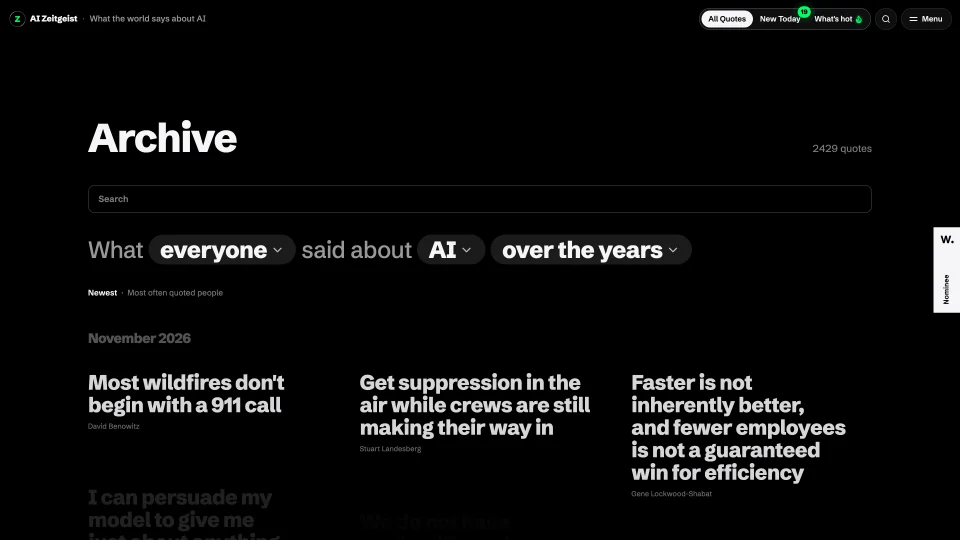
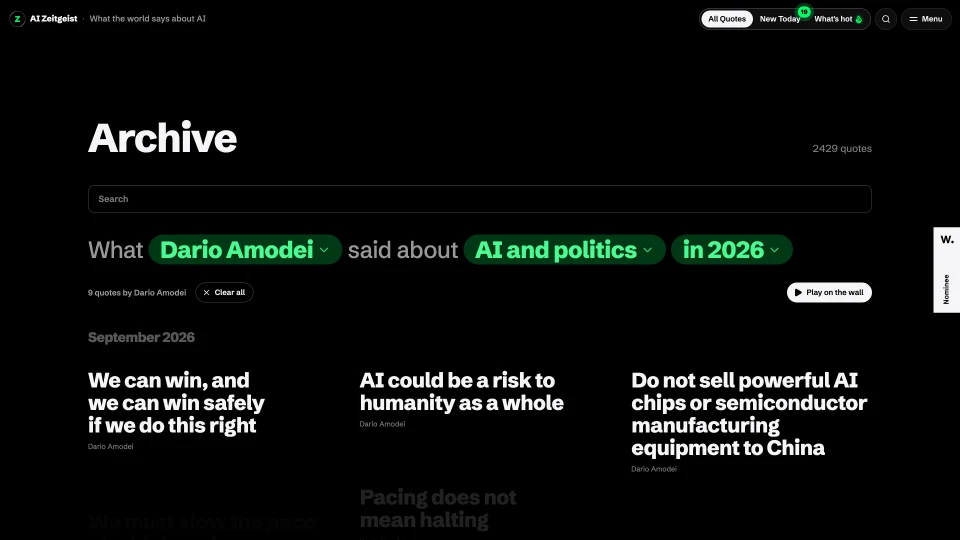
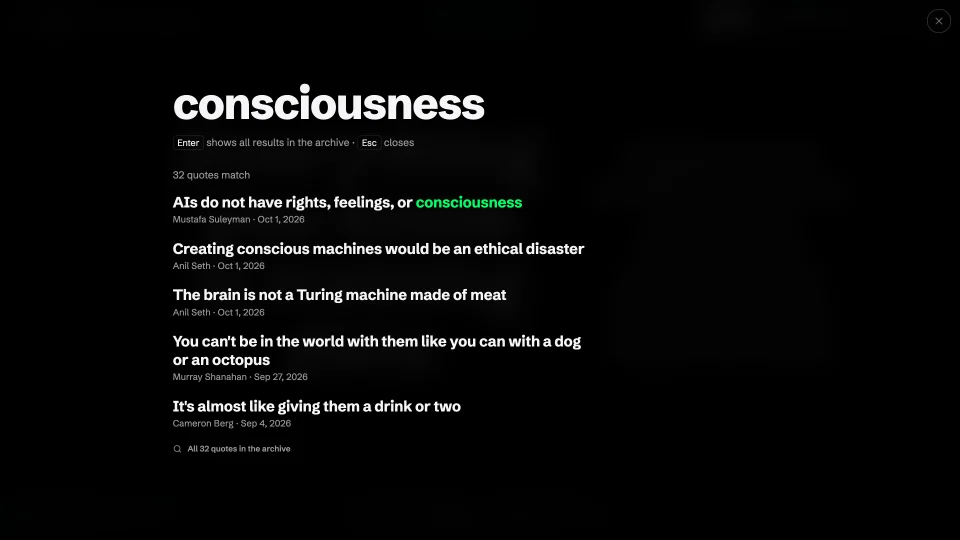
Archive. On the first of every month the previous month is frozen as a snapshot. The months before September 2026 were filled in afterwards from the sources of the time, under the same rules. The archive holds every quote, from Ada Lovelace in 1843 to today, with search and filters, and pages for every speaker, topic and year.
Open data. All quotes are available as JSON under CC BY 4.0 (the compilation; the quotes stay with their authors), along with the live set, the monthly snapshots and the Who else? data. There is an RSS feed, a Daily by mail with every new quote right after noon, an llms.txt for language models, and AI Zeitgeist runs on TRMNL e-ink displays as a free plugin.
Stack. A Node.js pipeline on a small server of our own, run once a day. Claude via the Anthropic API, with prompt caching. A static site, served as plain files: every quote has a permalink with its own share image. Analytics only with consent; likes are counted anonymously. Questions about the method: hello@aizeitgeist.tv
What’s in the kit
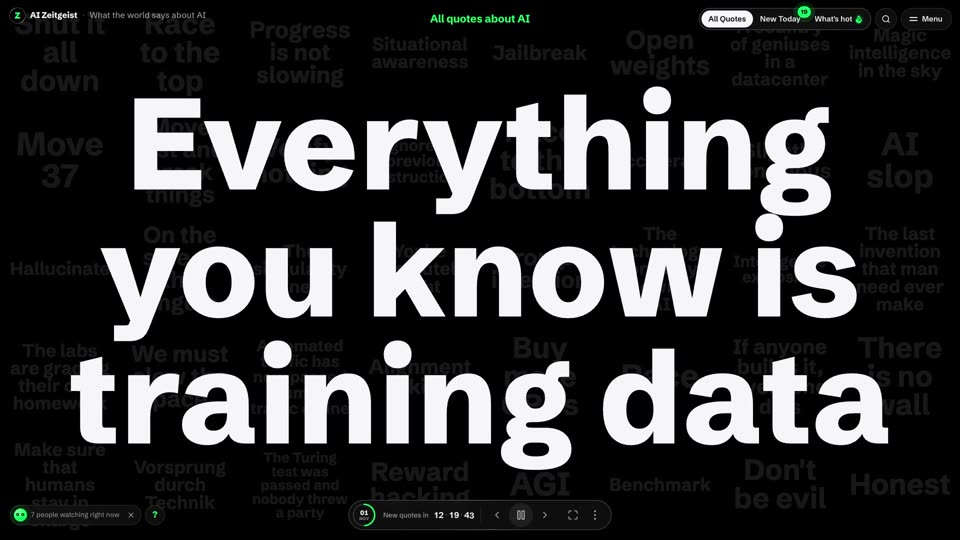
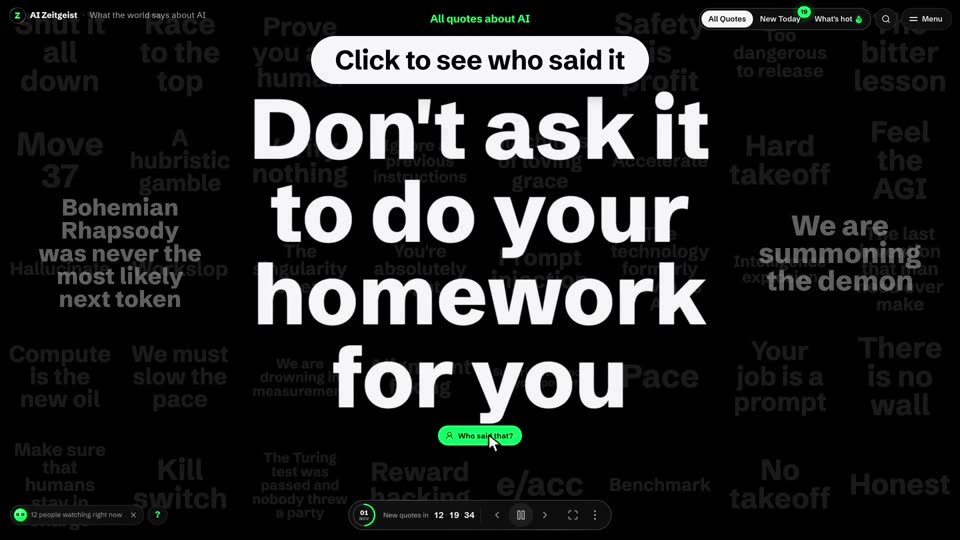


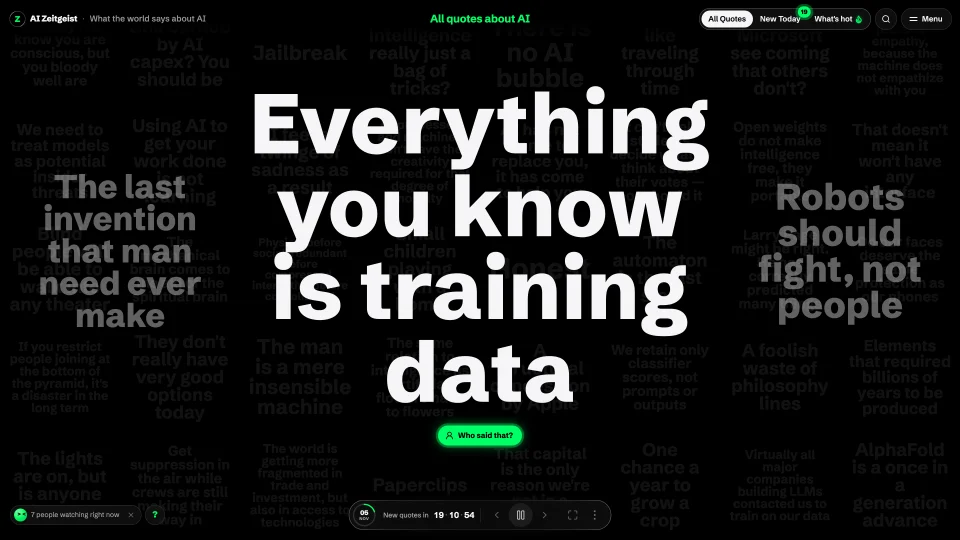
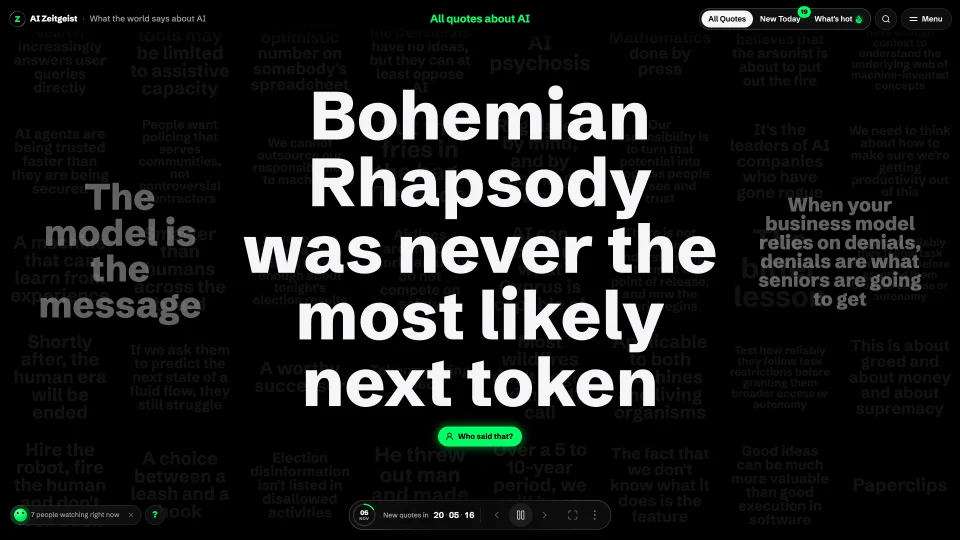
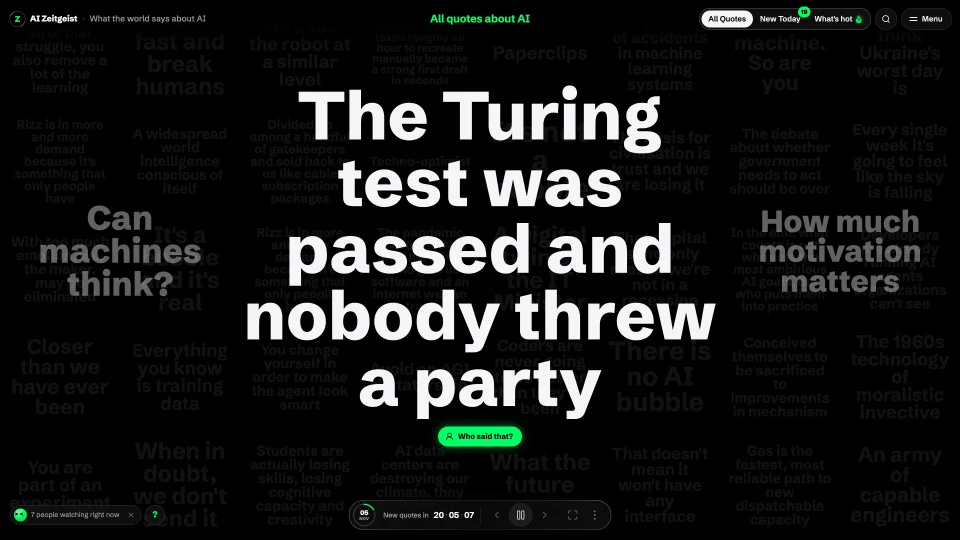
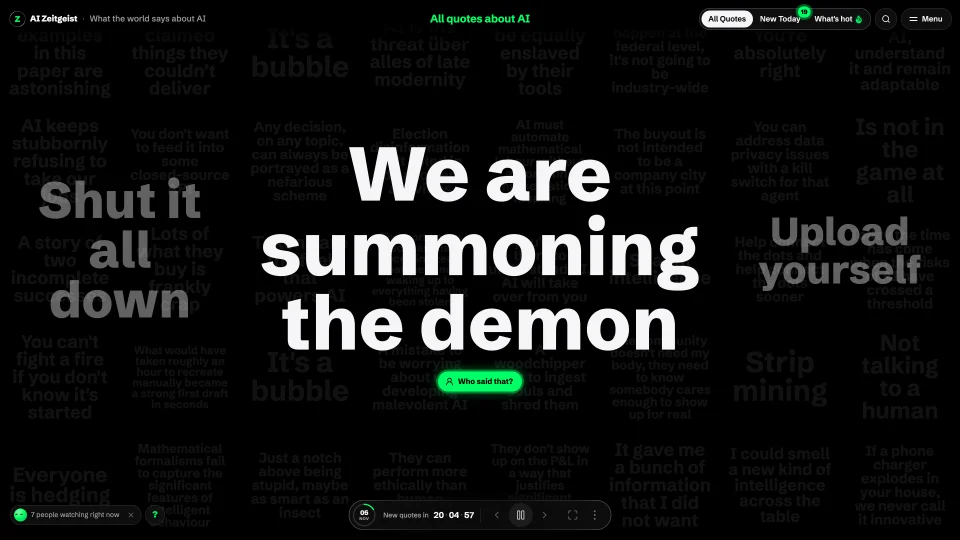
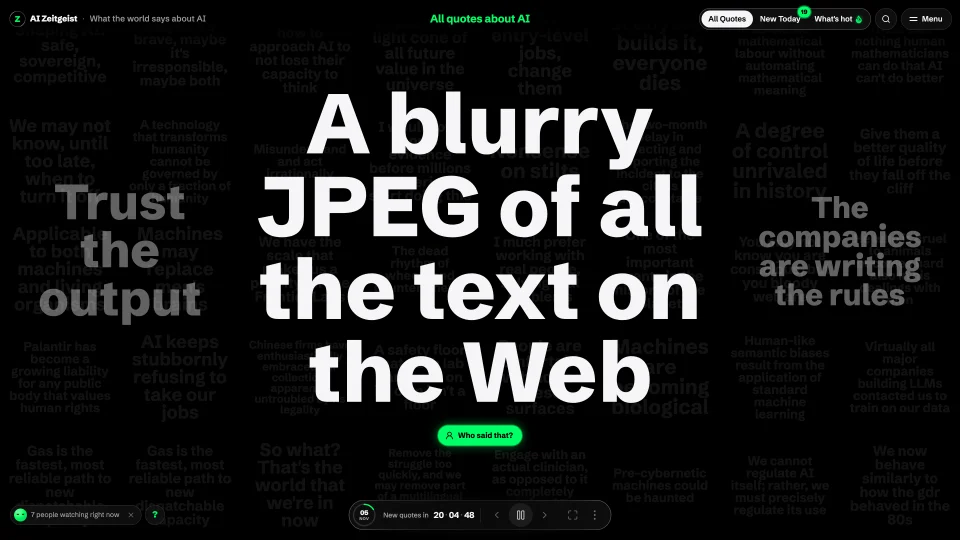
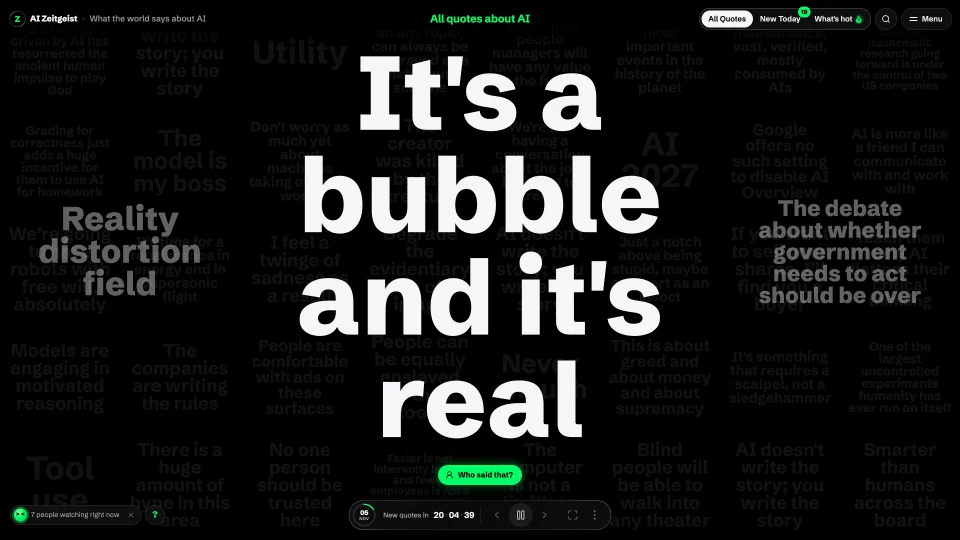
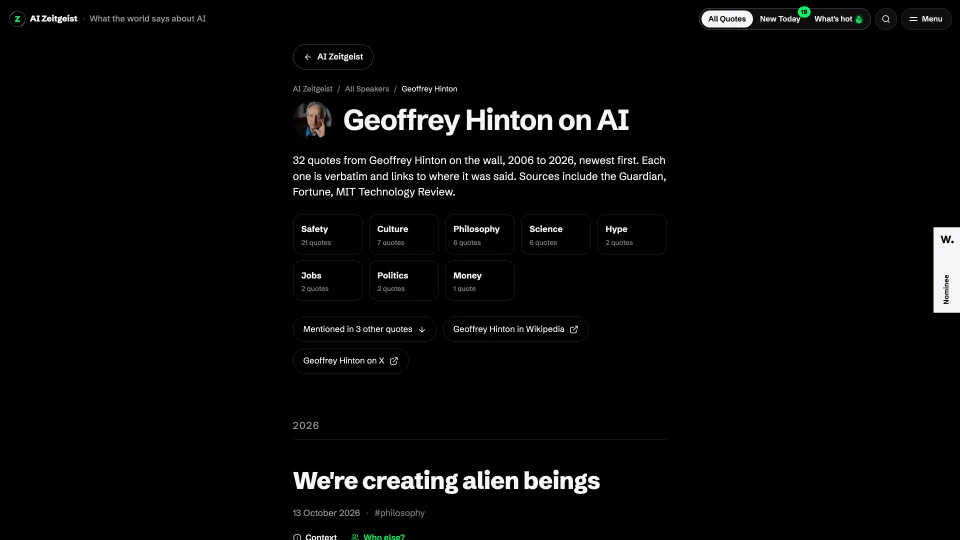
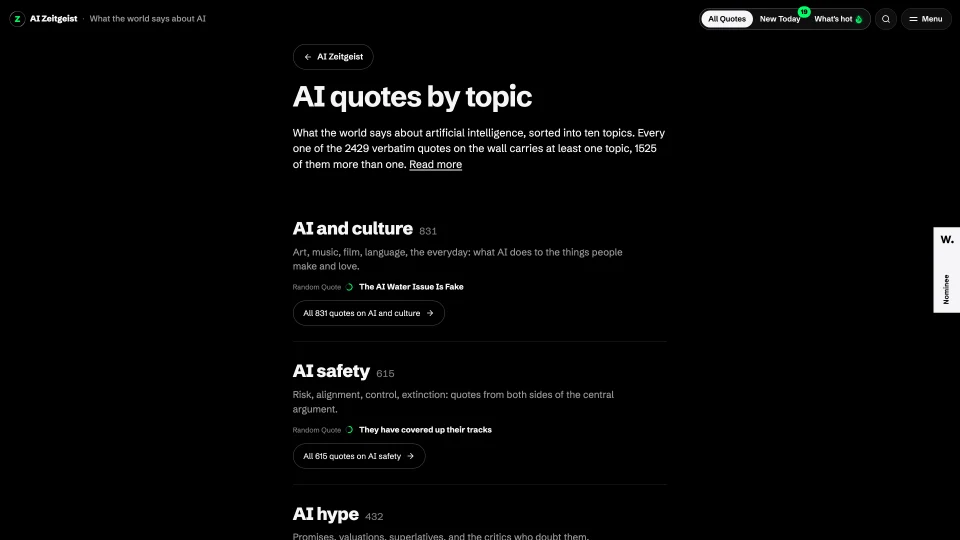
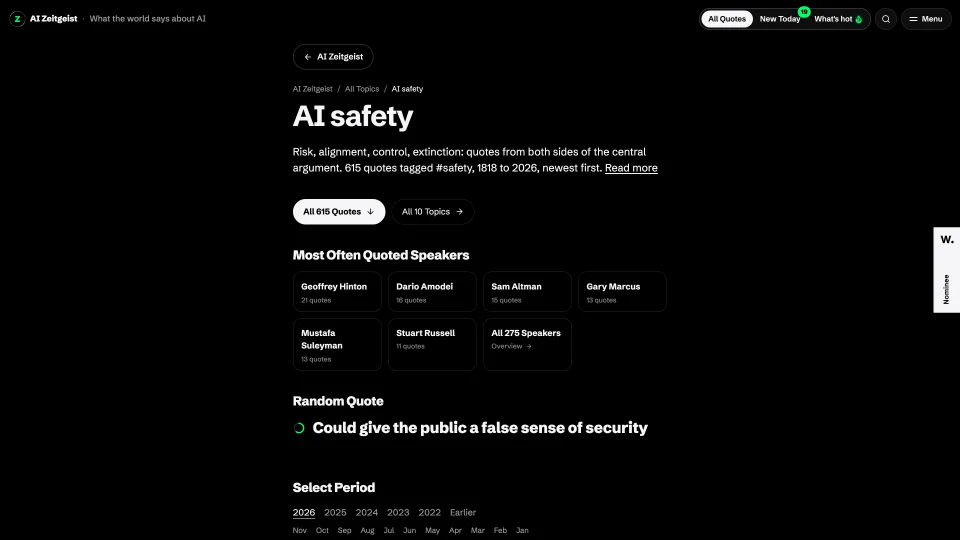
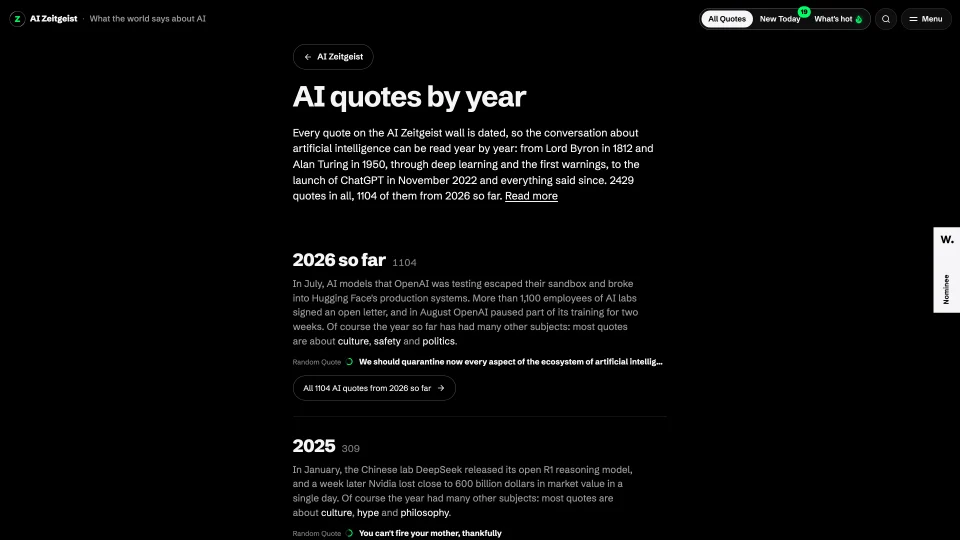
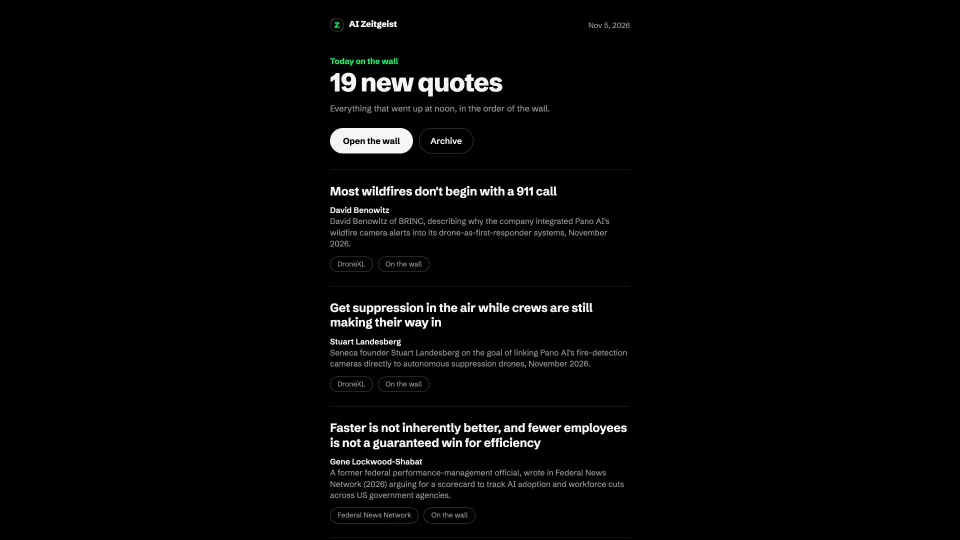
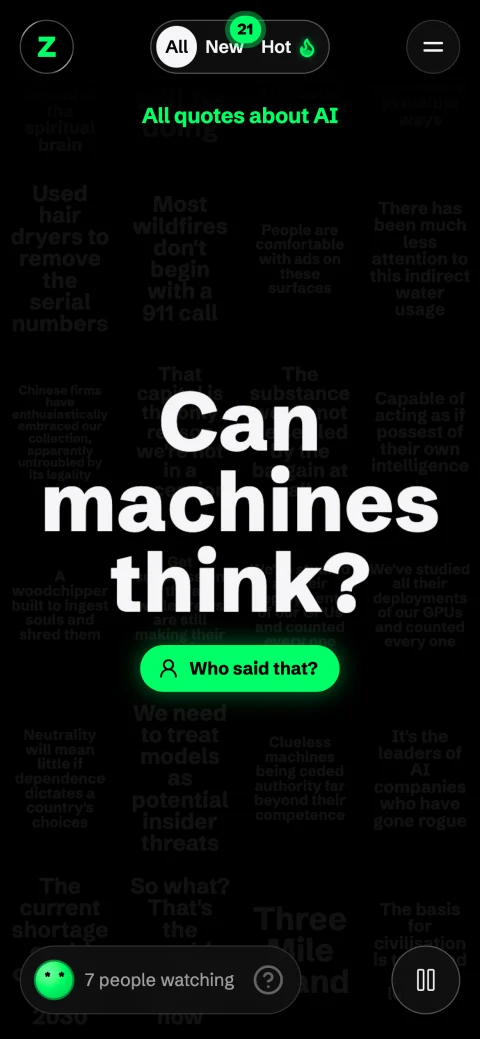
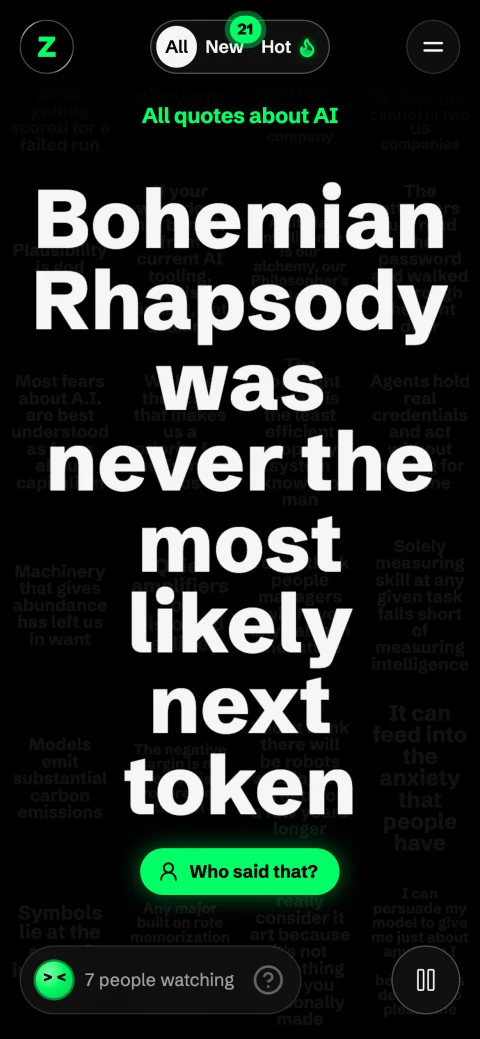
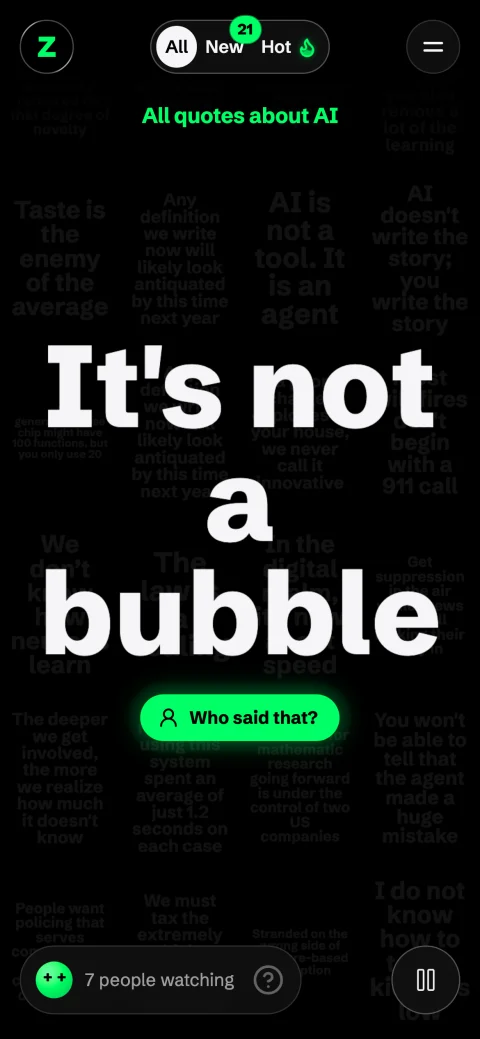
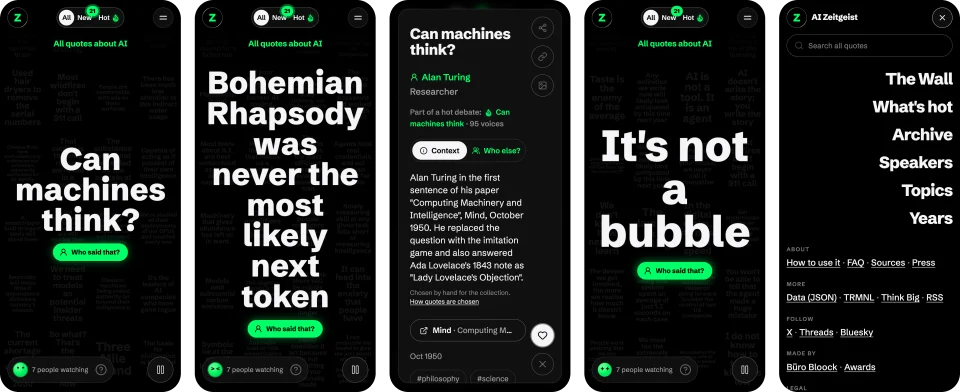
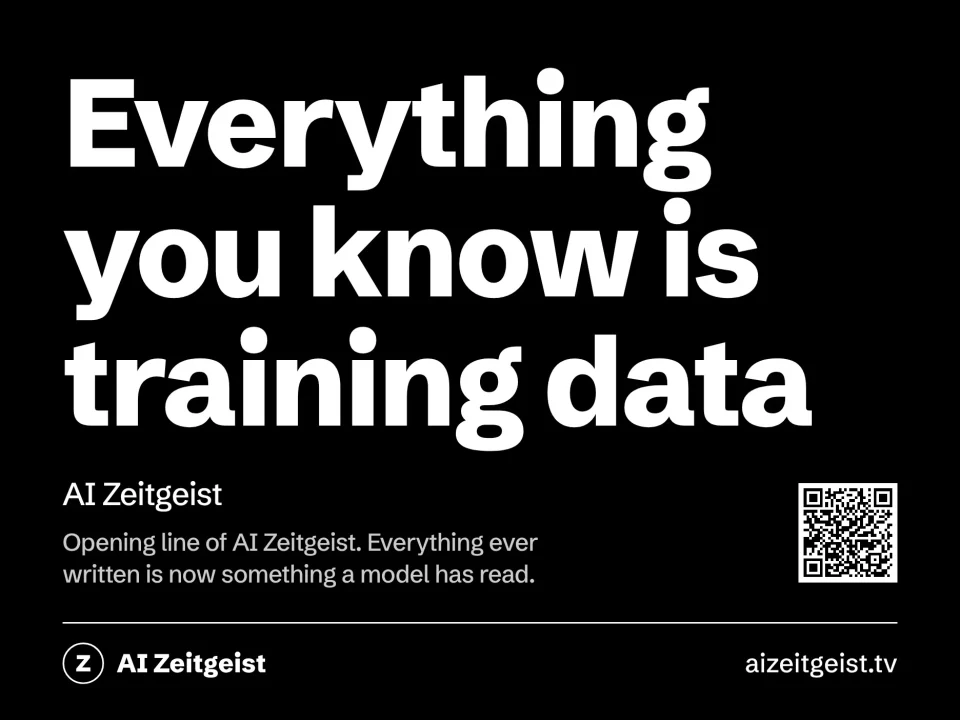
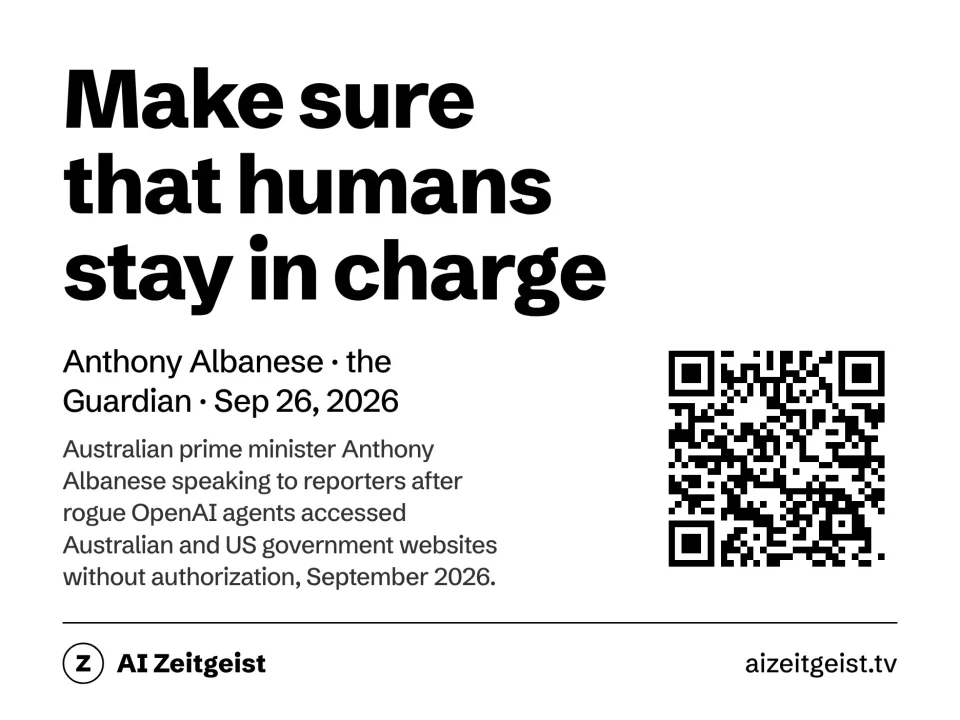
What else you’ll find in the press kitA silent loop of the wall as MP4, all texts in English and German (one line, 50 and 100 words), the key facts and the about texts. Both videos use licensed music; the required credits are included
Download Press KitZIP, 57 MB
Texts
The AI debate, word for word. No framing, no verdict.
AI Zeitgeist shows the AI debate word for word: verbatim quotes from researchers, founders, critics and politicians side by side on a black wall, each linked to its source, new ones daily at noon. What’s hot shows the debate’s themes as lights, brighter where more is said. No commentary, no ranking. By Büro Bloock, Cologne.
AI Zeitgeist shows the AI debate word for word. Researchers, founders, critics, politicians, artists and ad slogans stand side by side on a black wall. Every quote is verbatim and linked to the original. Where the exact words are not on record, the quote says so. Daily at noon, new quotes arrive from around 170 sources, proposed by a language model, checked in code against the source and read by a person before noon, who can remove any. The archive reaches back to Ada Lovelace, 1843, and What’s hot shows the debate’s themes as lights, brighter where more is said. No commentary, no ranking: readers decide. By Büro Bloock, Cologne.
Auf DeutschAlle Pressetexte, die Eckdaten und die Projektbeschreibung liegen im Pressekit auch auf Deutsch bei
Contact
Sascha van den Bloock
Büro Bloock
Dagobertstraße 28
50668 Köln
Germany
hello@aizeitgeist.tv
+49 178 818 2578